
Where Have They Gone?
Sadly, my relationship with my father has always been clouded by an alcohol haze. For the first impressionable years of my life, in some sick way, I thought it was a relatively normal existence. I cannot remember many, if not any days, he did not drink. It wasn’t social drinking. It was “survival” drinking for him. Mom was his biggest enabler. Our society was another one.
It’s possible that she knew what he would be like without it and thought he was better with it. I think he cares for us in his strange way. He somehow, every morning after bingeing every night, is able to get up and go to work.
Thinking that this was “normal” likely grew out of the fact that I was experiencing other family dynamics in other kinds of social situations. I am a mostly good, intelligent, talented, and helpful young man. This is not healthy or acceptable for me, my family and our social sphere. Through these years, the “elephant in the room,” was never addressed.
The treatment was as if everyone was dealing with a spoiled adult child. Many adults I knew were abusing alcohol. Trying to help them or compelling them to change their lives is treated as a social enigma. Dealing with a manchild, with no discipline, was also dangerous to others and him. One morning, I woke up and started getting ready for school and their bedroom door was closed. Up to that point in my life, I never saw that happen. Mom then quietly exited the room, closed the door and slipped down the stairs. I couldn’t tell if dad was home, but our almost new 63 red Volkswagen Beetle was not in the driveway. The day just went on as usual without another thought. When I came home, there was no VW in the driveway and the bedroom door was still closed.
“Hey Mom, where’s Dad and the car?” She hesitated, which was not her nature.
“Your dad had a little car accident last night”. “Is he alright?” I was concerned.
Her final surrender to the truth was to bring me in the bedroom to see him. He had a 4″ gash on his forehead and a huge lump protruding out. He was conscious, but in my mind he should have been hospitalized. He was so drunk when it happened, he likely opted out. He had left some bar inebriated and started driving home. The roads were icy and the slid into
a ditch rear first, along the road. When the car hit, the driver’s seat broke off of its supports and he was thrown backwards head first, into the back seat. His head actually hit the rear window and it popped out without a break . He should have been a dead man. Somehow I hoped that this was in some way a lesson learned.
The car was essentially totaled. A month or two later, one cold, icy January night, we got a knock on the door. It was our neighbor Danny, who himself was a drinker. His cute blonde wife was the first woman I had ever seen in a bikini. She was a drinker too, a day drinker. She would sunbathe seminude in her wide open back yard, all summer, with a drink in her hand. They thought they were a hip partying type couple of the day . Danny came in from the cold icy February night and queried,
“Where’s Dad,” he fondly called pops.
“He’s not home yet,” Mom answered.
“Well, his car is by the curb, the door is open, the lights are on and no one’s there!”.
They went outside, went by the car and truly no one was there. They called his name a few times. Finally, from under the car they heard a moan. Apparently, he was so drunk that when he had pulled up, he had opened the door, stepped out and slipped on the ice all the way under the car. It was in some ways laughable and in most ways, sad.
They brought him in the house, sat him down and gave him a few cups of coffee. During their chat, dad quietly got up and said he wanted to get something from the car. He went out and Danny and mom continued talking. After about 10 minutes, he didn’t return. They got up, went back out and saw the same thing. The car door was open again, lights on and he again had slipped under the car and this time he was passed out!
A comedy of sorts but a tragedy of real life. In my family we were covering up to make things look respectable. They were attempts to keep what went on our secret. What followed was a debate about how we could get my Dad the medical help he clearly needed.
“We need to take you to hospital, to the emergency room your head needs attention,” from me. “No, I don’t want to be taken to hospital,” from my Dad.
He was sober enough at times, to still try to create a glossy family exterior or just in denial that there was nothing serious. Growing up in a family with an alcoholic parent feels like you’re walking through a forever minefield. At any moment something could happen that may detonate a mine. It could possibly be catastrophic.
An incident of drunken driving which hurts other people or violence or verbal abuse. I feel terror in my own home at what I’m witnessing. There is hypervigilance layered into my system, particularly around drinking. I live with it every day . Through my own life experiences, I have learned about my exaggerated stress response and a disdain for other abusers.
I am patterned to loathe the sound of the freezer door opening, ice clinking in his glass and the sound of liquor glug,glug, glugging into it. It literally makes me shudder! I find it impossible not to go to a party and observe what others are drinking. How fast they drink, how quickly they need their glass filled, what they offer others, what is their skin like (men with red faces often drink too much). I monitor these details carefully. Should I suggest some water? Should I pour the booze down the sink? Should I try to hurry us out of wherever we are or hurry any guests to leave? Is there anything that can possibly shut this down so I can know him as a real person?
I know Mom watered down his vodka from time to time. The panic, the stress, the bizarreness of it all comes back continually. Much of it I have tried to block out. How is it okay for a child to be responsible for managing her parents’ drinking? I don’t think it should be but who else will? It seems that if I can control the situation, maybe I could make it better for all of us.
The illusion of control feels better than contemplating the blackness of endless drinking and not knowing what would happen. Nothing feels safe or dependable when you have an alcoholic parent. You can’t ever rely on that parent or the other parent really, because of the way alcohol takes over everything. So the idea of being able to take a small, controlling action often makes me feel better. All the while, feeding the hope and desire that somehow we can “fix the drinking.”
As the only son and youngest child, I am always trapped into sitting with him in the evenings. I am tasked with trying to get my Dad to somehow stop drinking. Mom didn’t say “please do the anger and fight. Argue with your Dad about his drinking because I cannot cope or take on that role,” but that is what happens. I became my family’s caretaker.
My sister tended to what mom needed, being her confidante. She advised her and helped her fight battles that she seemed unable to take on. The roles were switched. Instead of me being cared for, I was the caretaker, the negotiator, the peace keeper.
Being a parentified child is really common for adult children of alcoholics. As a teenager I often tried to come up with the perfect speech. Maybe my Dad would really be able to hear me and understand the damage that his drinking was doing to himself and the fabric of our family.
When health advice came out that we should all be eating five portions of fruit and vegetables daily, I became convinced that if I could just get him to do that, he might stop drinking. Maybe he would not drink so much all of the time. That included my desire to have them both stop smoking.
I dread any social engagements with my Dad, monitoring his drinking for signs that things might kick off or get out of hand. Luckily, his drunkenness does not lead to violence. It is more the fighting and words, lack of relational and emotional safety, and embarrassment about his behavior.
It is always the crushing sense of shame. It makes me feel like I am defective, that no one would want to be with me. That no one would want to be intimate with me. That if they found out the truth about our family they would run for the hills. It seemed important to hide the truth of what went on in our family. I made it a point not to have any of my friends come over. To eliminate any chance that they could see him in all of his glory.
I wanted to create a perception to the world that my home life was normal as their perception of me. Everyone believed I had very high standards based on my school life. I think I have become somewhat of a perfectionist, precisely because of this shame and the lack of being seen and supported as a child.
Mom tried everything to help that other than leave him. Of course we wanted to shine and be perfect. Maybe we could perfect things enough that miraculously we would perfect the drinking away? Now that Sarah and I are close again and I care for her deeply, the thought of having her meet my rude, crude, drunk dad was horrible. Her parents, whom I have met a few times, are sweet, down to earth people. I hadn’t to this point even approached the subject with her in the fear that this horrible family flaw would taint her view of me.
As 1968 moved along, it was nothing but bad news on the world front. In the evenings watching Walter Kronkite deliver the daily dose of sadness on tv was depressing. In January, the war escalated dramatically .The Vietnam War saw the major turning point event known as the “Tet Offensive,” where North Vietnamese and Viet Cong forces launched a surprise coordinated attack across South Vietnam during the Lunar New Year holiday. This was the worst year to date with an estimated loss of over 17,000 US soldiers and over 27,000 ARVN South Vietnam fighters killed.
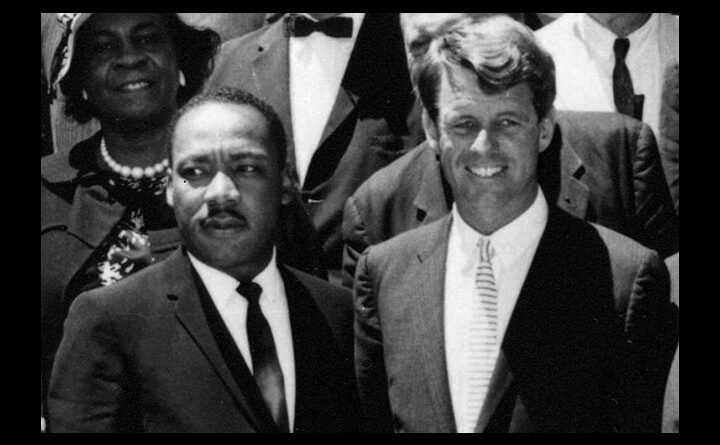
In April a great American freedom fighter was gunned down at his hotel. The assassination of Martin Luther King Jr. on April 4, 1968, dashed the hopes of black Americans for the commitment of white America to racial equality. White Americans respected him more than other black leaders, but his opposition to the Vietnam War infuriated many. Robert F. Kennedy, now a candidate for the presidency, delivered a speech in Indianapolis after learning of Dr. King’s assassination.
“What we need in the United States is not division; what we need in the United States is not hatred; what we need in the United States is not violence or lawlessness, but is love and wisdom, and compassion toward one another, and a feeling of justice towards those who still suffer within our country, whether they be white or whether they be black.”
To conclude, Kennedy reiterated his belief that the country needed and wanted unity between Blacks and Whites and encouraged the country to “dedicate ourselves to what the Greeks wrote so many years ago: to tame the savageness of man and to make gentle the life of this world.”
He finished by asking the audience members to pray “for our country and for our people.”[ Rather than exploding in anger at the tragic news of King’s death, the crowd exploded in applause and enthusiasm for a second time, before dispersing quietly. Sadly, on May 6th, Robert Kennedy was shot by Sirhan Sirhan after a campaign speech in Los Angeles.
On that sad evening I witnessed something that was unforeseen and shocking. I had just come back from practicing with the band. I wanted to connect with Sarah on the phone. This was a time of great political turmoil and expression. The freedom of speech aspect of our culture and counter culture took things to great heights and to new lows. One of the avenues of expression were bumper stickers and lapel pins which had become popular.
They were easy to make, cheap to buy and there was no censorship. You could get away with putting just about anything on them. Dad had this habit of bringing home little tokens from his bar visits. Plastic monkeys you could pick up and link from a pile, little toys and these pins with various expressions on them. I guess the more racy ones he would put on the door jamb over the kitchen entry. I knew that because they were visible as you walked upstairs near the top.
These pins did not stop at political candidates, peace and love signs .They got pretty nasty, ugly and hurtful. I guess he put them there to keep away from us. As I was about to come downstairs I heard sounds of low swearing and loud pounding. I slowly crept down and saw dad on his knees with a hammer pounding these buttons. He was sobbing and tears were flowing, a sight I had rarely if ever witnessed
“Dad, what’s going on? Are you okay,” I pleaded.? He just went on pounding . I was almost speechless “Can I do something?”
“Damn it Sam, if you really want to, here, why don’t you read some of these?”
He grabbed two that were badly damaged and dented by then. What was on them was very sad, hurtful and ugly. One read, “Martin Luther Coon” and the other, “Tie Ethel’s tubes.”
The first was pure hate and racism. The second was painfully stinging as it was referring to Ethel Kennedy, Bobby’s wife, who had just witnessed the murder of her husband. They have 11 young children, all of which are fatherless now. It just made me so sick to my stomach that someone could think thoughts like this much less put them on a lapel pin. I went silent and I was horrified.
He continued to break them all. I silently helped him clean up and with this, I saw a side of him that I had hoped was there. He had completely surrendered to emotion, hurt and sorrow. I witnessed the hidden empathic and sensitive side that he rarely showed to me. From then on my disappointment and criticism of him lessened. I never told anyone about this, even sis didn’t know.
